Asbestos Used in World Trade Center Construction Blamed for Man’s Mesothelioma

A New York man diagnosed with malignant mesothelioma has filed a claim against a general contracting company that built the World Trade Center, accusing them of exposing him to the asbestos that caused his illness. Though ALCOA argued against Kenneth Last’s case being heard, Justice Adam Silvera of the Supreme Court of New York ruled that the case should move forward for a jury to hear.
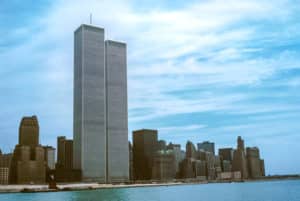
Mesothelioma Victim Exposed to Asbestos at World Trade Center Workplace
The claim filed by Jo-Ann Silviano blamed Kenneth Last’s malignant pleural mesothelioma death on exposure to asbestos-containing materials that ALCOA had used to construct the World Trade Center. Mr. Last had worked at the site as a sub-contracted employee beginning in 1972, and the claim presented evidence both that the carcinogenic material had been used and that ALCOA, the general contractor in his work area, had known of its dangers.
ALCOA filed a motion for summary judgment to have the case against them dismissed, asserting both that they had not used asbestos-containing fire-proofing material during the time that Mr. Last had been employed on the site and that they were not responsible for his work because he was a sub-contracted employee.
Mesothelioma Victim’s Family’s Argument Prevails
In response to ALCOA’s motion, Mr. Last’s family argued that a general contractor can be held liable for a victim’s mesothelioma if it can be shown that they had actual or constructive notice that they were creating unsafe working conditions. In response, ALCOA submitted a memo from the World Trade Center’s construction manager discussing the need to switch from an asbestos-based fire-proofing spray to one that did not contain asbestos, but Mr. Last’s family pointed out that the memo did not indicate a date by which the switch would be made, or even a confirmation that it actually would be made.
Since ALCOA could not provide proof that the mesothelioma victim could not have been exposed to asbestos on their worksite and Mr. Last’s family submitted evidence that the company had been well aware of the risks surrounding asbestos’ use, Justice Silvera denied the company’s motion for summary judgment and the case will move forward to a jury.
The court’s ruling reinforces that general contractors on major construction projects cannot evade asbestos liability by pointing to subcontracting arrangements or incomplete remediation efforts. By emphasizing ALCOA’s knowledge of asbestos use and the absence of proof that safer materials were implemented in time, the decision confirms that constructive notice and failure to act are sufficient to send mesothelioma claims to a jury. For workers exposed on large commercial sites like the World Trade Center, the ruling preserves accountability even decades later. It also signals that courts will closely scrutinize claims of asbestos abatement when documentary gaps remain.


FREE Financial Compensation Packet
- Info on law firms that will recover your HIGHEST COMPENSATION
- Learn how to get paid in 90 days
- File for your share of $30 billion in trust funds