Pointing to Combination of Products Increasing Risk of Injury, Court Denies Mesothelioma Defendant’s Appeal

Donald Jordonek died of malignant mesothelioma after years of exposición al amianto from a number of sources. His estate sued the companies whose products he had worked with as an auto mechanic, including the company that manufactured brake lathes and grinders that he worked with while employed at a Goodyear Tire Service Center. The manufacturer argued against liability because their product did not contain asbestos, but the Superior Court of Delaware denied their request for dismissal from the case, noting that the combination of the company’s product with asbestos-containing parts created an increased risk of injury and a duty to warn.
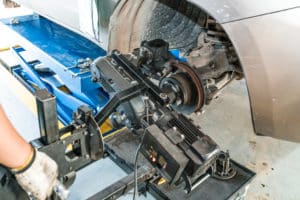
Brake Grinding Company Files Motion to Be Dismissed from Mesothelioma Claim
In arguing against its liability for Mr. Jordonek’s malignant mesothelioma, Hennessy Industries (predecessor-in-interest to AMMCO Tools, Inc., which manufactured the brake grinder) argued that they had no duty to warn because their product did not contain asbestos. They asserted that the fault for an asbestos-related disease lays entirely with the company that provides the asbestos-containing part or supplies.
In its review of the case, the court noted that while the brake grinder’s argument was correct, it was also true that Ohio law established exceptions to that rule. Those exceptions require the mesothelioma victim to produce evidence that the original manufacturer recommended or required the use of an asbestos-contaminated part with its product, and therefore would have foreseen that asbestos products could later have been used with its product.
Judge Denies Brake Grinding Company’s Bid to Evade Mesothelioma Liability
In its ruling, the court noted a previous decision that applied to this particular mesothelioma case, writing, “the defendant’s product was intended to be used with another product for the very activity that created a hazardous situation. Where the intended use of a product inevitably creates a hazardous situation, it is reasonable to expect the manufacturer to give warnings.”
The judge concluded, “If an Ohio court is prepared to impose liability on a manufacturer where its products require the incorporation of another manufacturer’s product, it surely would impose liability when a combination of the two products increases the risk of injury.” The case will proceed for a jury to hear.
This ruling reinforces that asbestos liability is not limited to manufacturers whose products physically contain asbestos. When a product is designed, marketed, or routinely used in combination with asbestos-containing components, courts may impose a duty to warn if that combined use foreseeably increases the risk of injury. By allowing the mesothelioma claim to proceed, the court signaled that manufacturers cannot avoid responsibility by narrowly defining their product in isolation. For mesothelioma victims, the decision broadens accountability to include companies whose equipment played a critical role in releasing asbestos fibers during normal use.


Paquete de compensación financiera GRATUITO
- Información sobre despachos de abogados que recuperarán su INDEMNIZACIÓN MÁS ALTA
- Aprenda cómo cobrar en 90 días
- Solicite su parte de $30 mil millones en fondos fiduciarios